
Office Move Checklist
A detailed office move checklist helps Melbourne businesses move smoothly, stay organized, and control costs. Office relocation is a big job that needs careful planning to avoid problems and keep things running smoothly.
Good planning covers everything, legal, financial, and logistical, before the move. Businesses that prepare ahead can avoid delays, keep employees productive, and settle into their new office quickly.
Key Benefits of an Organised Office Move:
- Cost Savings – Avoid unexpected expenses by budgeting for lease agreements, moving services, and office fit-outs in advance.
- Increased Efficiency – A clear plan helps the business get back to work quickly with minimal downtime.
- Minimal Disruptions – Employees, clients, and stakeholders stay informed, reducing confusion and productivity loss.
- Better Use of Space – Strategic planning allows for an optimised office layout that enhances workflow and employee well-being.
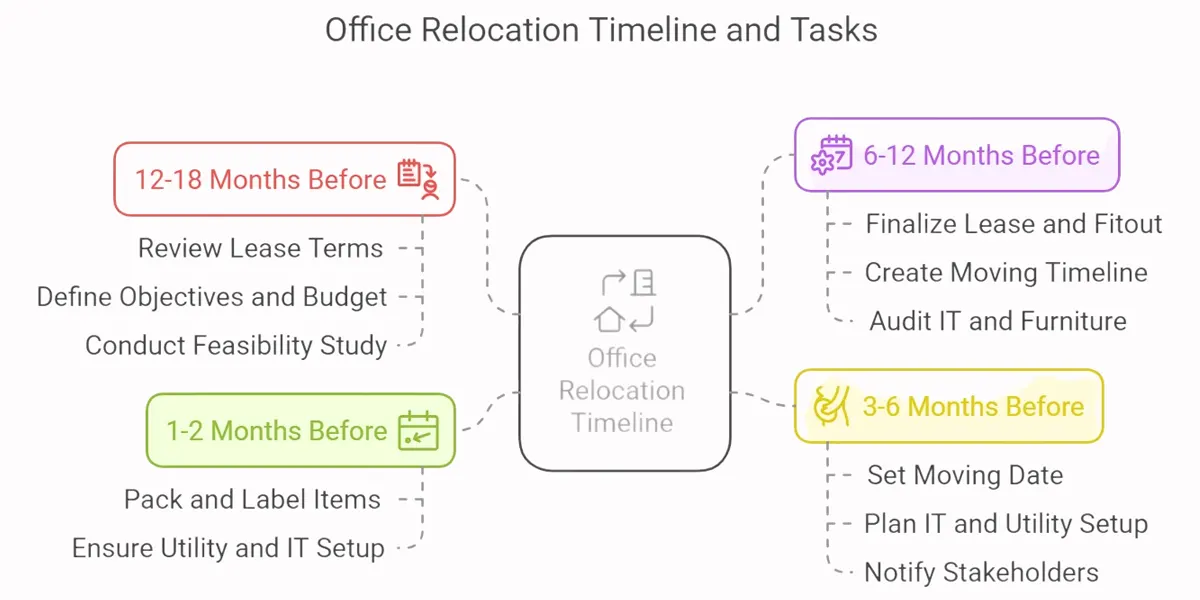
1. 12-18 Months Before the Move
The earliest stages of planning set the foundation for a smooth relocation. At this stage, businesses should review their lease agreements, set clear goals, and start looking for new locations.
1.1 Review Current Lease and Objectives
Before making any commitments, businesses must thoroughly review their current lease to understand their legal obligations.
- Lease Exit Terms – Check how much notice you need to give, any fees for ending the lease early, and whether you need to return the office to its original condition.
- Renewal vs. Relocation – Weigh the benefits of relocating against renegotiating the existing lease.
- Relocation Goals – Define key objectives, such as reducing costs, increasing accessibility, improving brand positioning, or enhancing employee satisfaction.
1.2 Find a Workplace Design Partner
A well-designed office layout can significantly impact productivity, collaboration, and company culture. Engaging a workplace design expert at an early stage helps to:
- Develop a strategy for an optimal work environment based on business growth and operational needs.
- Make sure the new office supports technology, flexible work setups, and employee comfort.
- Provide insights into space planning, fit-out requirements, and future-proofing the office design.
1.3 Find the Best Office for Your Business
Choosing the right office location is critical to business success. A feasibility study should consider:
- Accessibility – Being near public transport, parking, and major roads makes commuting easier for employees and clients.
- Amenities – Nearby dining, retail, fitness, and childcare facilities that enhance work-life balance.
- Ability to Grow – Ensuring the new location aligns with long-term growth and expansion plans.
- Competitive Advantage – A strategic move can enhance brand presence and attract top talent.
1.4 Plan for Make-Good Obligations
Many office leases require businesses to restore the space before moving out. This is called ‘make-good’ and includes:
- Cost Breakdown for Repairs – Budgeting for repairs, repainting, and removal of installations or fixtures.
- Hiring Contractors – Engaging professionals to handle end-of-lease fit-outs efficiently.
- Negotiating Terms – Talking to the landlord about replacing repairs with a cash payment.
2. 6-12 Months Before the Move
At this stage, the foundation for a smooth and efficient move should be firmly in place. This period is crucial for securing the new office, mapping out the logistics, and ensuring operational continuity during the transition.
2.1 Finalise New Lease Terms
Signing a new lease agreement is one of the most critical aspects of an office move. Before committing to a new space, consider the following key negotiation factors:
- Lease Duration and Flexibility – Ensure the lease term aligns with business growth plans and offers options for renewal or early exit if needed.
- Rental Costs and Incentives – Negotiate rental rates, potential discounts, or landlord contributions for office fit-outs.
- Maintenance and Repair Responsibilities – Clarify who is responsible for maintenance costs, repairs, and insurance.
- Make-Good Clauses – Understand any end-of-lease obligations and budget accordingly for potential restoration work.
- Legal Review – Engage a commercial real estate lawyer to review terms before signing.
2.2 Create a Detailed Moving Timeline
An office relocation checklist helps businesses create a timeline so the move stays on track and runs smoothly. Key steps include:
- Setting Key Milestones – Outline important dates, including lease finalisation, IT setup, packing schedules, and official moving day.
- Team Coordination – Put leaders in charge of guiding their teams through the transition to keep things running smoothly.
- Notifying Employees – Keep staff informed of progress and expected changes in the workspace.
- Risk Management and Contingency Planning – Plan for unexpected delays or challenges by building buffer periods into the timeline
2.3 Checking Inventory and Furniture
Moving is a great time to decide what furniture and equipment to keep, replace, or upgrade.
- Furniture Audit – Assess existing furniture to determine what is still functional and aligns with the new office layout.
- Sustainability Considerations – Arrange for recycling, donation, or resale of unwanted office furniture and equipment.
- New Purchases – Plan and budget for well-designed furniture, meeting room setups, and collaborative workspace enhancements.
2.4 IT Audit and Upgrades
Technology is key to any office, and moving is a great time to upgrade systems.
- Reviewing Tech Setup – Assess existing systems, including servers, workstations, and networking equipment.
- Data Backup and Security – Ensure all company data is securely backed up before the move.
- Connectivity Needs – Evaluate internet speed, network security, and phone line requirements in the new space.
- Hardware and Software Upgrades – Identify outdated systems and consider investing in modern solutions to improve efficiency.
- Plan for IT Downtime – Develop a strategy to minimise operational disruptions during the transition.
3. 3-6 Months Before the Move
With the major planning milestones completed, this phase focuses on operational execution. Securing essential services, finalising logistics, and informing stakeholders become top priorities.
3.1 Select a Moving Date
Choosing the right day for the move is key to minimising business downtime and disruption. Consider the following:
- Effect on Operations – Pick a date that avoids peak business periods or critical project deadlines.
- Weekend or After-Hours Moves – If feasible, move outside regular working hours to prevent workflow interruptions.
- Availability of Moving Services – Book professional removalists well in advance to secure preferred dates.
3.2 Budget Planning
A good budget helps you plan expenses and avoid unexpected costs. Important budget items include:
- Moving Company Fees – Quotes for packing, transport, and unpacking services.
- New Office Fit-Out Costs – Expenses for modifications, furniture, and IT installations.
- Make-Good Obligations – Costs associated with restoring the old office to its original condition.
- Temporary Operational Costs – Additional expenses for temporary remote work solutions or storage facilities.
- Contingency Fund – A buffer for unforeseen costs, such as last-minute IT upgrades or additional repairs.
3.3 Change-of-Address Notifications
To prevent disruptions in communication and business operations, update stakeholders with the new office details.
- Clients and Partners – Notify key clients, suppliers, and partners about the upcoming move.
- Government and Regulatory Agencies – Update business registrations, tax offices, and licensing bodies.
- Financial Institutions – Inform banks, lenders, and insurers of the address change.
- Online Presence – Update Google My Business, website contact details, email signatures, and social media profiles.
3.4 Hiring Professional Services
Engaging experienced professionals can streamline the moving process and reduce stress.
- Moving Companies – Select a relocation service specialising in commercial office moves.
- Office Fit-Out Contractors – Work with designers and builders to finalise modifications.
- IT Support Services – Ensure IT specialists are available to assist with system installations and troubleshooting.
3.5 Establish a Moving Team
A dedicated team will help oversee and coordinate different aspects of the move, ensuring accountability and efficiency.
- Department Representatives – Assign key personnel from HR, IT, and Operations to manage their respective areas.
- Communication Lead – Ensure all employees are regularly updated and informed about moving plans.
- Logistics Coordinator – Oversee packing, transportation, and setup in the new office.
- Post-Move Support Team – Designate a group to handle any immediate issues after relocation, such as troubleshooting IT systems or resolving employee concerns.
4. 1-2 Months Before the Move
With the move fast approaching, this period is all about finalising preparations, ensuring all logistics are in place, and keeping stakeholders informed. This is also the time to complete office modifications and initiate packing while ensuring essential utilities are set up in the new space.
4.1 Office Fitout and Preparation
Before moving in, make sure the new office is ready for your team and work.
- Final Office Setup – Finish any needed changes, like adding walls, desks, and meeting rooms.
- Comfort and Design – Make sure furniture, lighting, and workspace setup support employee well-being and efficiency.
- Compliance Checks – Verify that the new space meets health, safety, and accessibility regulations.
- Deep Cleaning – Conduct a thorough cleaning to ensure a fresh and inviting work environment.
4.2 Packing and Labeling Strategy
Packing should be done in a planned way to guarantee a smooth transition into the new office.
- Department-Based Packing – Assign each team the responsibility of packing and labeling their materials.
- Labeling System – Use a color-coded or numbered labeling system to fast-track unpacking at the new location.
- Secure Sensitive Documents and Equipment – Safeguard confidential files, IT hardware, and other valuable assets.
- Dispose of Unwanted Items – Discard or donate outdated office equipment and furniture.
4.3 Stakeholder Communication
Make sure employees, clients, and suppliers know about the move to avoid confusion.
- Internal Communication – Update employees about moving schedules, workspace arrangements, and expectations.
- Public Notice – Notify clients, suppliers, and partners of the new address via email, newsletters, and website updates.
- Update Business Listings – Modify your address details on Google My Business, social media, and company directories.
4.4 Utility setup and checks
Make sure utilities and IT systems are installed and working before employees move in.
- Security Systems – Install and test access controls, CCTV, and alarm systems.
- Power and HVAC Systems – Ensure electrical outlets, lighting, and air conditioning are functioning optimally.
- IT Infrastructure – Set up and test servers, workstations, and cloud-based systems to minimise downtime.
5. Move-Out Day
The moving day is when all planning comes into action. Delivering a well-structured process ensures efficiency and minimises downtime.
5.1 Final Walk-Through and Checks
Before leaving, check that nothing is left behind and all lease requirements are met.
- Final Inventory Check – Confirm that all office equipment, documents, and furniture have been moved.
- Checking Lease Rules – Ensure that make-good obligations have been fulfilled, including necessary repairs and cleaning.
- Lock and Secure the Property – Hand over keys and access cards to the landlord or building manager.
5.2 Execution of the Move
The moving team should coordinate logistics to ensure everything is transferred efficiently to the new location.
- Supervise the Moving Process – Appoint team members to oversee packing, transportation, and unloading at the new office.
- Unpack Essentials First – Set up IT infrastructure, meeting rooms, and workstations before moving in general office equipment.
- Provide Employee Assistance – Assign a support team to help staff settle into their new workspace.
6. Additional Tips for a Smooth Relocation
An office move isn’t just about shifting furniture, it’s about keeping work running smoothly, helping employees adjust, and making the new space more efficient.
6.1 Employee Feedback and Communication
Keeping employees engaged and informed helps ease the transition.
- Hold Q and A Sessions – Address any concerns employees may have about the move.
- Provide a Moving Guide – Share office layouts, seating arrangements, and other useful details.
- Encourage Feedback – Allow employees to share insights on how the new office can be further improved.
6.2 Office Insights & Space Improvement
Improve Office Efficiency and Functionality
- Track Workspace Use – See which areas employees use most to improve the layout.
- Make Workspaces Comfortable – Adjust lighting, temperature, and seating to suit employees.
- Promote Flexibility – Add open spaces, shared desks, or teamwork areas based on company needs.
Relocating an office in Melbourne can be complicated, but with good planning, it can go smoothly and be a positive experience. Using an office move checklist helps ensure everything is handled properly, from lease agreements to setting up IT and keeping employees informed.
By planning ahead, businesses can reduce disruptions, improve the workspace, and create a better environment for their teams. Whether you're moving to expand, get a better location, or upgrade your facilities, a well-organized move sets you up for future success.
FAQs About Office Moves in Melbourne
How far in advance should I start planning my office relocation?
It’s best to start planning 12-18 months in advance to allow time for lease negotiations, location scouting, and budgeting. For smaller office moves, 6-12 months may be sufficient.
What are the biggest challenges in relocating an office?
The most common challenges include minimising downtime, managing IT transitions, notifying stakeholders, and coordinating logistics while ensuring business continuity. Proper planning helps reduce these risks.
How can I reduce downtime during an office move?
To minimise downtime, plan your IT and utility setup ahead of time, schedule the move outside business hours, and create a detailed moving timeline with assigned responsibilities.
What should be included in an office relocation budget?
Your budget should cover moving services, lease costs, office fit-out, IT setup, furniture, and make-good obligations for your old space. Always include a contingency fund for unexpected costs.
How do I notify clients and suppliers about my office move?
Send notifications via email, newsletters, and social media at least a month in advance. Update Google My Business, website contact details, and company directories to reflect your new address.